

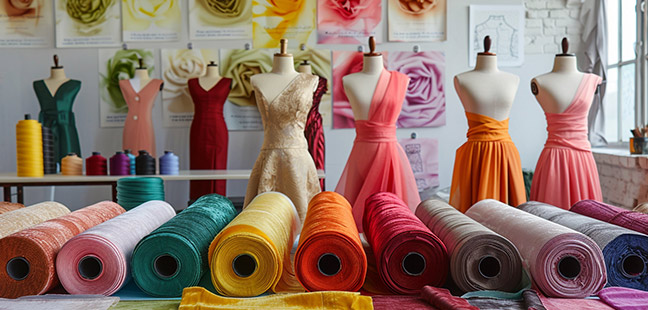
In the world of fashion design, a sketch is merely an abstract concept until it meets its material counterpart. A designer can draw a breathtaking gown with a sweeping, voluminous skirt, or a sharp, razor-structured suit, but the success of that garment ultimately rests on a single, critical decision: fabric selection.
The relationship between a garment’s silhouette—its overall shape and outline—and its fabric is deeply scientific. Choose the wrong textile, and a design meant to drape elegantly around the body can become stiff and awkward. Conversely, using a fabric that is too soft for a highly structured, geometric look will cause the garment to collapse. Master designers understand how fiber content, weave, weight, and elasticity interact with the human form. Bridging the gap between a two-dimensional drawing and a three-dimensional masterpiece requires an intimate understanding of fabric mechanics.
The Physics of Fabric: Weight, Drape, and Hand
Before a designer matches a fabric to a specific silhouette, they must evaluate the textile’s physical properties. Three primary characteristics dictate how a fabric behaves when cut and sewn: weight, drape, and hand.
Fabric weight is typically measured in grams per square meter or ounces per square yard. It classifies textiles into lightweight, medium-weight, or heavyweight categories. Lightweight fabrics like chiffon or organza react to the slightest movement of air, while heavyweight fabrics like melton wool or heavy denim hold their own shape regardless of external forces.
Drape refers to how a fabric hangs or falls on a three-dimensional form. A fabric with high drape, such as silk jersey or viscose, flows tightly against the contours of the body, pooling elegantly at the floor. A fabric with low drape, like taffeta or buckram, resists bending, casting outward to create a rigid, independent architecture around the wearer.
Hand describes the tactile sensation of the fabric—how it feels when manipulated between the fingers. The hand can be crisp, slick, dry, plush, or abrasive. The hand often indicates how a fabric will react to being creased, pleated, or gathered.
Matching Fabrics to Structural Silhouettes
Structural silhouettes include sharp A-line skirts, geometric evening wear, tailored corporate suits, and avant-garde garments with exaggerated proportions. These shapes require fabrics that can stand away from the human body, creating an illusion of volume or angularity that does not deflate over a day or evening of wear.
To achieve this independent architecture, designers rely on low-drape, high-weight, or highly tightly woven textiles.
-
Duchess Satin: This is a heavyweight, luxurious satin with a crisp hand and a lustrous sheen. It is a staple for structured bridal gowns and evening wear because it holds deep box pleats and dramatic folds flawlessly without requiring extensive internal wire framing.
-
Gazar: Famously used by master couturiers to create historic, sculptural shapes, gazar is a high-twist silk or synthetic weave that acts almost like paper. It can be molded into dramatic, gravity-defying collars and sweeping architectural capes.
-
Heavy Wool Crepe: For sharp tailoring, such as structured blazers and cigarette trousers, heavy wool crepe provides a pebbled texture that holds crisp pressed seams, sharp lapels, and structured shoulder lines while maintaining natural breathability.
-
Neoprene and Scuba Fabrics: In modern contemporary fashion, these synthetic, double-knit foam-like materials are highly favored for creating clean, unwrinkled, futuristic silhouettes that pop outward from the body automatically.
Selecting Textiles for Fluid and Fluid Silhouettes
On the opposite end of the spectrum are fluid, organic silhouettes. These include goddess-style maxi dresses, bias-cut slip dresses, cowl-neck blouses, and billowing bohemian skirts. The goal of these designs is to celebrate motion, tracing the natural contours of the human body and shifting dynamically as the wearer walks.
For fluid silhouettes, designers select high-drape, lightweight to medium-weight fabrics that possess a certain degree of elasticity or give.
-
Silk Chiffon and Georgette: These sheer, lightweight textiles are perfect for layered, ethereal silhouettes. They catch the wind easily, creating a floating effect that adds romantic drama to runway presentations.
-
Silk Silk Charmeuse: Featuring a glossy front and a matte back, charmeuse is incredibly fluid. When cut on the bias—meaning diagonally across the grain of the fabric—charmeuse clings smoothly to the waist and hips, creating a liquid-like drape that characterizes classic Hollywood glamour.
-
Rayon and Viscose Knits: These semi-synthetic fabrics provide a heavy, cool-to-the-touch drape that makes them ideal for everyday casual dresses, wrap tops, and draped cardigans that need to look polished without feeling restrictive.
Adapting to Volume: Gathering, Pleating, and Ruffling
Sometimes, a silhouette requires a fabric that can handle an immense accumulation of volume without becoming excessively heavy or bulky. Think of tiered prairie dresses, historic ballgowns, or garments utilizing dense ruffling.
When a designer plans to gather or ruffle fabric heavily, they must look at the thickness of the textile yarn. If the yarn is too thick, gathered seams will become bulky, puckered, and uncomfortable against the skin.
-
Cotton Lawn and Voile: These semi-sheer, ultra-fine cotton weaves are perfect for dense gathering and smocking. They allow designers to build multiple tiers of ruffles without adding unwanted weight or thickness to the waistline.
-
Tulle and Organza: When massive, cloud-like volume is desired for an evening silhouette, tulle and silk organza are the premier choices. Because they are exceptionally lightweight and open-weave, hundreds of yards can be layered together to build dramatic volume that remains airy and buoyant.
Frequently Asked Questions
What does it mean when a designer cuts a fabric on the bias, and how does it affect the silhouette?
Cutting fabric on the bias means rotating the pattern pieces forty-five degrees against the straight grainline of the woven textile. Woven fabrics typically have no stretch vertically or horizontally. However, when pulled diagonally, the weave shifts, creating a natural, elastic elasticity. Cutting on the bias allows stiff woven fabrics to drape like liquid, hugging the curves of the body seamlessly, which is ideal for slinky slip dresses and cowl necklines.
Why do some fabrics stretch out of shape after being made into a specific silhouette?
This usually occurs when a designer fails to account for fiber recovery or fabric weight. If a heavy fabric is used for a long, vertical dress silhouette without a supportive inner lining or structure, gravity will naturally pull the yarns downward over time, causing the garment to stretch out and lose its original proportions. Fabrics blended with synthetic elastomers, like spandex, offer better recovery, meaning they spring back to their original shape after being stretched.
How do lining and interfacing change the behavior of a chosen fabric?
Lining and interfacing act as the hidden support system of a garment. Interfacing is a hidden layer of material fused or sewn to the inside of specific areas, like collars, cuffs, and button plackets, to add temporary or permanent stiffness. A lining smooths the inside of a garment, reduces friction against the skin, and can add weight or opacity, effectively altering a lightweight fabric to behave with slightly more structure and stability.
Can natural and synthetic fabrics be used interchangeably for the same silhouette?
Not always. While synthetic fabrics can mimic the appearance of natural ones, their performance varies. For example, a polyester satin may look like a silk satin, but polyester retains body heat and lacks the breathability of silk, which alters how the fabric settles on the skin when sweat is introduced. Synthetics often have a slightly springier memory, meaning they resist certain types of soft, permanent draping that natural fibers accept effortlessly.
What is fabric memory, and why does it matter to a designer?
Fabric memory refers to a textile’s tendency to hold a shape, crease, or wrinkle after it has been manipulated or pressed with heat. Cotton, linen, and wool have high memory for heat-pressed creases, making them exceptional for pleated trousers or crisp kilt skirts. Synthetic fibers like nylon or polyester have synthetic memory; once heat-set during manufacturing, they will resist wrinkling but are also harder to alter or re-press into new shapes.
How do designers choose fabrics for hybrid silhouettes that are both structured and fluid?
For hybrid garments, such as a tailored blazer that transitions into a flowing pleated skirt, designers often use fabric splicing or strategic layering. They will choose a structured wool for the bodice of the garment to maintain the sharp silhouette, and seam-join a fluid silk or tech-poly fabric at the waist or hips to handle the fluid movement below, ensuring each part of the garment functions optimally.